
Standard Utah homeowners insurance generally covers sudden, accidental interior water damage—such as a burst PEX supply pipe or ruptured water heater—while excluding gradual leaks, neglected maintenance, and exterior surface flooding. Sewer or sump-pump backups require a separate policy endorsement, and exterior floodwater requires NFIP or private flood insurance.
Navigating a water damage insurance claim in Utah County can feel overwhelming when your basement carpet is already soaked. Policy language draws sharp lines between sudden plumbing failures, sump-pump backups, gradual seepage, and outdoor storm runoff—and how you document the loss during the first 24 hours often determines how smoothly your claim is approved.
If water is actively spreading right now in Wildflower, Talons Cove, Saratoga Shores, or Lehi, start mitigation first by calling our Saratoga Springs water damage restoration referral line at (801) 555-0194, because Utah insurance policies require homeowners to take prompt steps to prevent further damage.
What Utah Homeowners Insurance Typically Covers vs. Excludes
| Water Damage Cause | Standard Homeowners Policy | Endorsement or Separate Policy Needed |
|---|---|---|
| Burst supply pipe or frozen pipe (heat kept on) | Usually covered (sudden & accidental) | Standard policy covers water mitigation & rebuild; pipe repair itself is often excluded. |
| Sudden water heater, washer, or dishwasher rupture | Usually covered | Standard policy covers resulting water damage; failed appliance replacement is usually out-of-pocket. |
| Sump pump failure or basement sewer backup | Excluded by default | Requires a Water Backup & Sump Overflow Endorsement (check sub-limits, often $5k–$25k). |
| Lake Mountain storm runoff / window-well flooding | Excluded (exterior surface water) | Requires National Flood Insurance Program (NFIP) or private flood policy. |
| Slow dripping shower pan or months-old under-sink leak | Excluded (gradual / maintenance) | Rarely covered; early detection via smart leak sensors is critical. |
Step-by-Step Utah Water Damage Insurance Claim Process
Step 1: Mitigate First, Document Everything
Every homeowners policy contains a "Duties After Loss" clause obligating you to stop active water and prevent secondary mold growth. Take 20 to 30 clear, well-lit photos and a slow walkthrough video showing the water source, standing water depth, and affected finishes before crews begin emergency water extraction or flooded basement cleanup. Keep failed plumbing parts (such as a split braided supply hose) in a Ziploc bag for the adjuster.
Step 2: Review Your Declarations Page Before Calling the Claims Desk
Before filing a formal claim, check two numbers on your policy declarations page: your deductible (commonly $1,000 to $2,500 in Utah) and whether you carry a Water Backup endorsement. If your total mitigation and repair estimate—which you can rough-check in our Saratoga Springs cost calculator—is barely above your deductible, weigh whether paying out-of-pocket makes more financial sense than placing a water claim on your CLUE loss-history report.
Step 3: Understand Mitigation vs. Reconstruction Invoices
Insurance adjusters separate water losses into two distinct scopes:
- Emergency Mitigation Scope: Water extraction, Category 1–3 antimicrobial treatment, selective flood-cut demolition, LGR dehumidification, air movers, and daily moisture logs (frequently billed using Xactimate industry pricing software).
- Reconstruction / Put-Back Scope: Installing new drywall, insulation, baseboards, paint, carpet, or LVP flooring once framing is certified dry—plus any required municipal permits (see our Saratoga Springs building permits guide).
Step 4: Ask Your Restoration Contractor for Complete Documentation
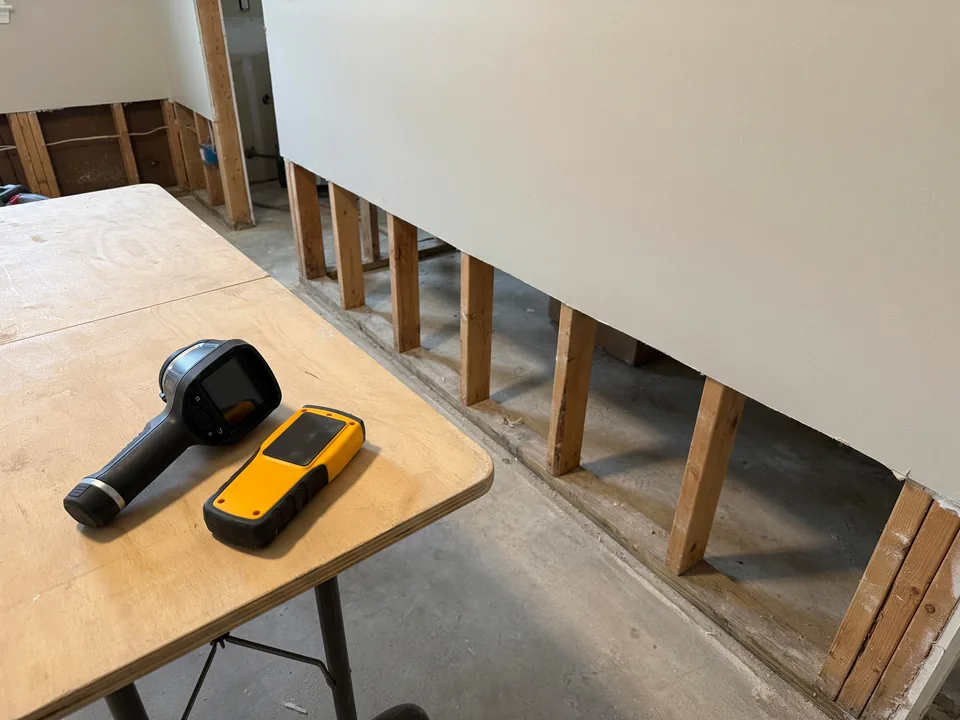
Adjusters approve mitigation invoices far faster when the independent restoration contractor provides a clean documentation packet: before-and-after photos, a floor-plan moisture map, daily psychrometric and wood-moisture logs, equipment placement counts, and clear Water Category / Class justification (explained in our water damage categories guide).
Key Coverage Traps for Saratoga Springs Homeowners
1. Low Sewer & Sump Backup Sub-Limits
Many Utah County homeowners add a Water Backup endorsement without noticing the default cap is only $5,000 or $10,000. In a fully finished walkout basement in Talons Cove or Legacy Farms, Category 3 sewage backup cleanup plus new drywall, carpet, and trim can easily exceed $15,000–$25,000. Reviewing and raising your backup endorsement limit before an emergency costs relatively little per year.
2. Freezing Pipe Exclusions in Vacant Homes
If you travel away from Saratoga Springs or Eagle Mountain during winter, most Utah policies require you to maintain heat inside the home or shut off and drain the water supply system. Turning the thermostat off completely to save money while on vacation can void coverage for burst pipe water damage. Follow our Utah County frozen pipe prevention guide before winter trips.
3. Confusing NFIP Flood Coverage with Standard Homeowners Coverage
Because the City of Saratoga Springs participates in the National Flood Insurance Program (NFIP), homeowners across ZIP 84045 can purchase dedicated flood coverage—which is the only policy type that typically responds to exterior storm and flash flood water entering through window wells or walkout doors. Note that NFIP policies carry a standard 30-day waiting period before taking effect, so they must be purchased well before storm season.
Do You Have to Use Your Insurer's "Preferred" Restoration Vendor?
No. Under Utah consumer principles, homeowners have the right to choose any qualified, licensed independent restoration contractor they trust—you are not forced to wait on an insurer's out-of-area preferred vendor list while water spreads through your basement. Verify that your chosen contractor documents moisture readings clearly, uses transparent itemized estimates, and communicates directly with your adjuster when needed.
Essential Insurance Documentation Checklist for Utah Homeowners
When an insurance adjuster reviews a water damage claim from Saratoga Springs, Eagle Mountain, or Lehi, clear organization speeds up approval and reduces back-and-forth disputes over scope. Keep a single digital folder (or printed binder) containing these eight items from Day 1:
- Timestamped Origin Photos & Video: Capture the failed component (burst PEX fitting, rusted water-heater seam, overflowing sump pit) before the plumber removes or discards it.
- Room-by-Room Standing Water Evidence: Photograph water depth against a ruler or baseboard in every affected room before emergency water extraction begins.
- Plumber's Cause-of-Loss Invoice: Ask your licensed plumber to write a plain one-sentence cause of loss on their receipt (for example, "Sudden rupture of cold-water supply line behind basement utility wall")—insurers rely heavily on cause-of-loss wording to confirm sudden vs. gradual coverage.
- Mitigation Contractor's Moisture Map & Daily Drying Logs: Confirm your restoration crew provides their initial moisture grid, Water Category/Class classification, equipment serial/count log, and daily psychrometric readings through final dry verification.
- Itemized Damaged Contents Inventory: List ruined personal property (rugs, furniture, electronics, stored gear) with approximate purchase date, brand, replacement cost, and clear photos before throwing anything away.
- Policy Declarations & Endorsement Pages: Highlight your dwelling limit, personal property limit, deductible, Water Backup endorsement sub-limit, and Ordinance or Law allowance.
- Temporary Living Expense (ALE) Receipts: If Category 3 contamination or major multi-floor tear-outs make your home uninhabitable, save hotel and meal receipts if your policy includes Additional Living Expense coverage.
- City Permit & Rebuild Documentation: Save CityWorks receipts and inspection cards if post-drying reconstruction requires permits from the City of Saratoga Springs Building Department.
Understanding Replacement Cost Value (RCV) vs. Actual Cash Value (ACV) Payouts
Many Utah homeowners are startled when their insurer's first reconstruction check is smaller than the contractor's estimate. That gap is usually recoverable depreciation. Under a Replacement Cost Value (RCV) policy, the insurer pays the depreciated Actual Cash Value (ACV) upfront minus your deductible, and then releases the withheld recoverable depreciation once you submit proof that the rebuild work has been completed. Ask your adjuster in writing whether your policy pays RCV on both dwelling finishes and personal contents, and confirm the deadline for submitting completion invoices so you never forfeit withheld depreciation funds.
If your loss is currently unfolding and you need immediate drying to satisfy your policy's duty-to-mitigate clause, call (801) 555-0194 to connect directly with an independent local mitigation contractor serving ZIP 84045.
Working Smoothly with Independent Contractors & Your Utah Adjuster
Clear communication between you, your independent restoration crew, and your insurance adjuster prevents surprise billing gaps. Before demolition begins, ask the contractor to walk you through their scope of work, explain which items fall under emergency mitigation versus post-drying reconstruction, and confirm whether they supply standard line-item estimates and moisture logs directly to your claim portal. Keep written notes of every adjuster phone call—including date, claim number, and any verbal approval for structural drying or sewage backup cleanup—so every step of your Saratoga Springs claim stays transparent from start to finish.
Frequently Asked Questions
Will filing a water damage claim raise my Utah homeowners insurance rate?
Does insurance pay for the plumber who fixes the broken pipe?
How long does a water damage insurance claim take to settle?
Need Local Water Mitigation Help in ZIP 84045?
Call (801) 555-0194 any hour to connect with an independent local water damage restoration contractor serving Saratoga Springs, Eagle Mountain, and Lehi.
Call (801) 555-0194 — 24/7 Dispatch